AgentField Documentation
The AI backend. Build, deploy, and govern AI agents like APIs.
/
Fastest way in: one prompt, full backend
After install, type /agentfield in Claude Code, or describe your system in plain English. Stack is live under docker compose in one shot.
Try it
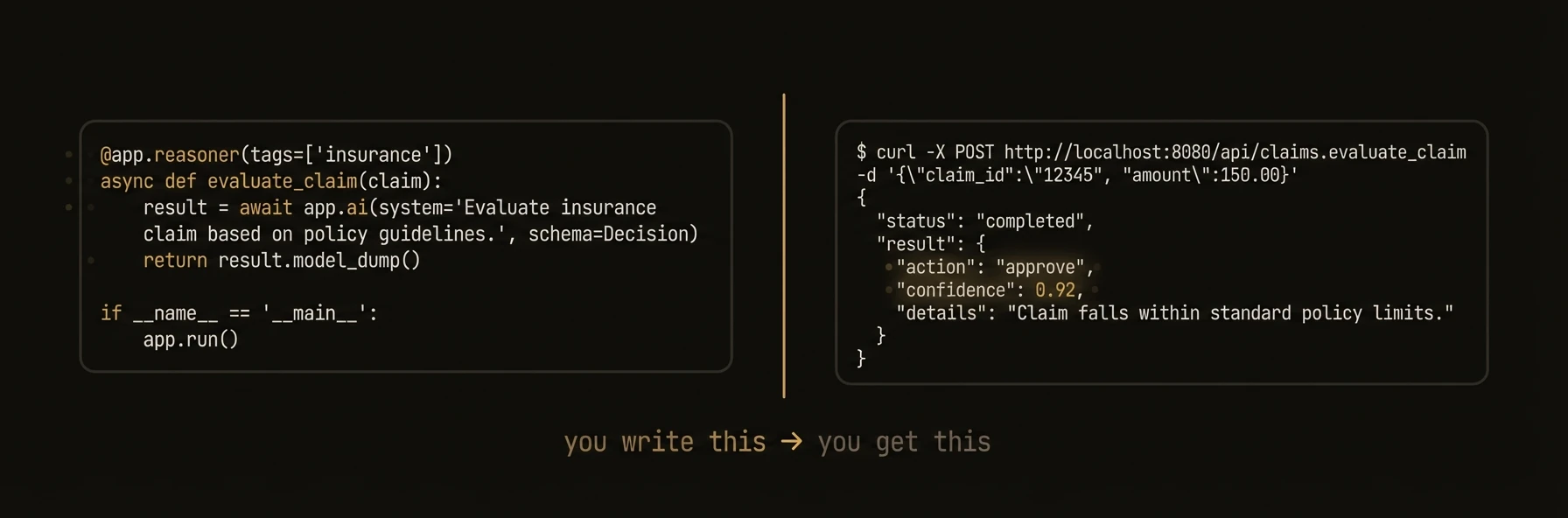
from agentfield import Agent, AIConfig
from pydantic import BaseModel

app = Agent("demo", ai_config=AIConfig(model="anthropic/claude-sonnet-4-20250514"))

class Decision(BaseModel):
    action: str

@app.reasoner()
async def route(text: str) -> dict:
    out = await app.ai(
        system="Pick one action: summarize | escalate | done.",
        user=text,
        schema=Decision,
    )
    return out.model_dump()

app.run()- APIs — decorated functions become HTTP endpoints with discovery and tracing.
- Models — 100+ LLMs, structured output (Pydantic / Zod / structs), tool calling.
- Multi-agent —
app.call, shared memory, async, webhooks, governance (DIDs, policy, audit).